I've not been able to watch many films recently, but I've certainly been active in my TV watching. I will soon do a set of TV reviews, speaking about shows I like, and possibly looking at new shows in the US. But, for now, here are the films I've seen in the past while.
 The Searchers
 - I'm still not a massive fan of Westerns (sorry, Andy!), but this was a pretty good film nonetheless. It was a little slow-moving for my liking, but the pace at least suited the film. Having been shown the first few minutes in a previous class, I was more than a little surprised to see the family killed off at the start. However, it is interesting that there is a whole family history that one can read from the scene that is not of massive importance to the rest of the story. Normally such a perfectly executed scene of subtle exposition would only be present when a necessity to the story. Whilst it wasn't, it gave the film's world a sense of history, and it gave us some indication to Ethan's past. One minor let-down was the strange conclusion when Ethan finds Debbie and has a sudden and unprompted change of heart about her.
 Saw
Saw - Paul decided that he should introduce me to
Saw, and so we sat and watched it the night before reshoots on
The Golden Rule. I was pleasantly surprised to find that it was actually a very watchable and enjoyable thriller; not a horror like I had presumed - and I don't think I can be blamed for that presumption! The psychological tomfoolery (if the term is not too tame) is really interesting, and the dilemmas and tricks were well-played. A part of me thinks that coincidence plays a big part, because if anything had played out differently in that room then perhaps the game would have been rather less interesting. But, to be honest, that was an afterthought, and it didn't intrude on my enjoyment of the film. So I now join Paul in recommending that you see Saw. And then try the slide. It's delightful.
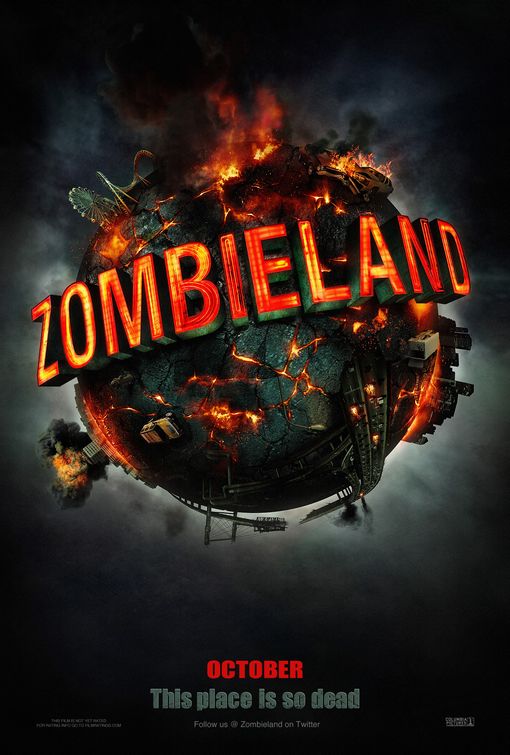 Zombieland
 - My favourite zombie films are
Shaun of the Dead and
Dead Set (okay, not really a film). Both mock the zombie-genre, and both are very funny, but they do it in very different ways. In
Zombieland, we find yet another unique zombie-comedy: a zom-com, I believe. Much less of the comedy comes from the zombies or the genre itself. A lot of the humour comes from the characters and the dialogue. I would lie if I said it was witty, but it was certainly funny and enjoyable. The characters were pretty expanded, which is always a plus, and I found that Jesse Eisenberg had one of the few characterisations of the awkward-teenager that I actually liked. Additionally, I really liked the road-trip structure of the film, and the device of the rules coming up on screen - which I don't think I would have normally liked.
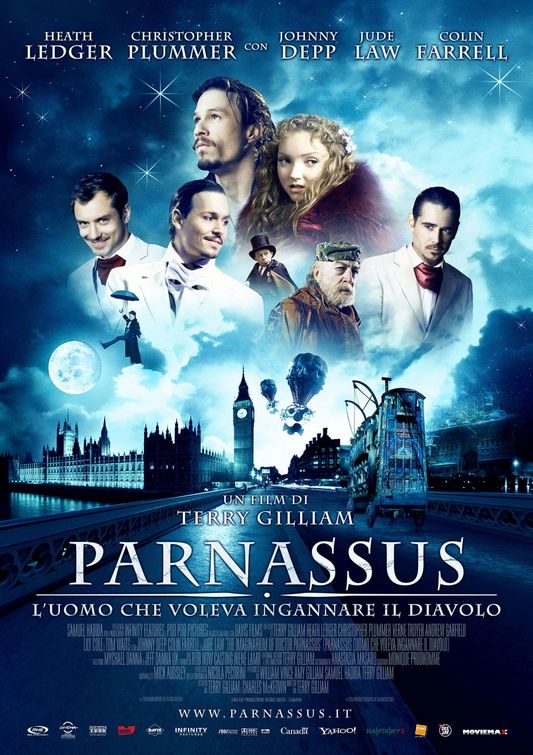 The Imaginarium of Doctor Parnassus
 - As I had expected, this was a curiously fun and strange film. Heath Ledger's performance was good, but it certainly wasn't the strongest part of the film. I was far more interested in the story, and I really wish we had found out more about the fantasy world. I'd like to highlight that I was quite impressed by the young'uns in the film. Both Lily Cole and Andrew Garfield really captivated me, and I found similarities in the latter's character to Tristan in
Stardust (which is only a good thing). I really like this young, noble and British archetypal character that is developing in new fantasy films.
 The Battle of Algiers
 - Whilst I did find myself getting into and enjoying
The Battle of Algiers, I now find that I've forgotten almost everything about it. I'm quite surprised by this, and a little bemused too, particularly because it makes reflection on the film rather difficult. I can't quite explain or justify my lack of memory, though it could have been an overwhelming sense of excitement about an impending episode of
Doctor Who which just made it all fall right out of my head, or possibly a lack of connection to the film itself. Either way, I enjoyed the film whilst it was on. I didn't quite buy into it being like a documentary (and Andy isn't the only source that I've heard the comparison from, either) but it did feel very realistic in its depiction of the circumstances and events of the time.
 2012
2012 - Fun
Day-After-Tomorrow-like destruction, and in more ways than one. So much so that I'm actually saving my thoughts on the film for a post about the similarities between the two, and the defined structure used in all films of the disaster genre. I know; you just can't wait!


